B
Blanco Pro
Services
Hospitality Guide

Restaurant Epoxy Flooring in New Jersey: The Operator's Guide

June 2026 8 min readcommercial applications
Restaurant Epoxy Flooring in New Jersey: The Operator's Guide

New Jersey restaurants run on tight margins, tighter schedules, and the constant pressure of health inspections. The floor underneath your line cooks, servers, and guests has to survive grease, dropped knives, boiling water, harsh degreasers, and 16-hour service days — and still look sharp the next morning. A professionally installed restaurant epoxy floor delivers a seamless, slip-resistant, USDA-compliant surface that does exactly that. Whether you're upgrading a back-of-house kitchen in Hoboken, a dining room in Princeton, or a craft bar in Jersey City, the right epoxy system pays for itself in lower maintenance, fewer slip claims, and inspections that pass on the first walk-through.

Restaurant Epoxy Flooring in New Jersey: The Operator's Guide — detail

Why restaurants are ditching tile and sealed concrete

Quarry tile and sealed concrete have been the default in NJ restaurant kitchens for decades — and both fail in the same place: the seams. Grout lines absorb grease, harbor bacteria, and crumble under acidic cleaners. Sealed concrete dusts, cracks, and stains within a year. A seamless 100% solids epoxy floor with a urethane or polyaspartic topcoat eliminates every joint, every porous surface, and the entire grout-scrubbing routine.

  • Fully seamless — no grout lines to trap grease, food, or bacteria
  • Engineered slip resistance for wet, greasy kitchen environments
  • Resistant to oils, animal fats, acids, and commercial degreasers
  • USDA, FDA, and HACCP compliant for food-service environments
  • Integral cove bases for sanitary wall-to-floor transitions
  • Custom colors and finishes for front-of-house design impact

Where epoxy works best in a restaurant

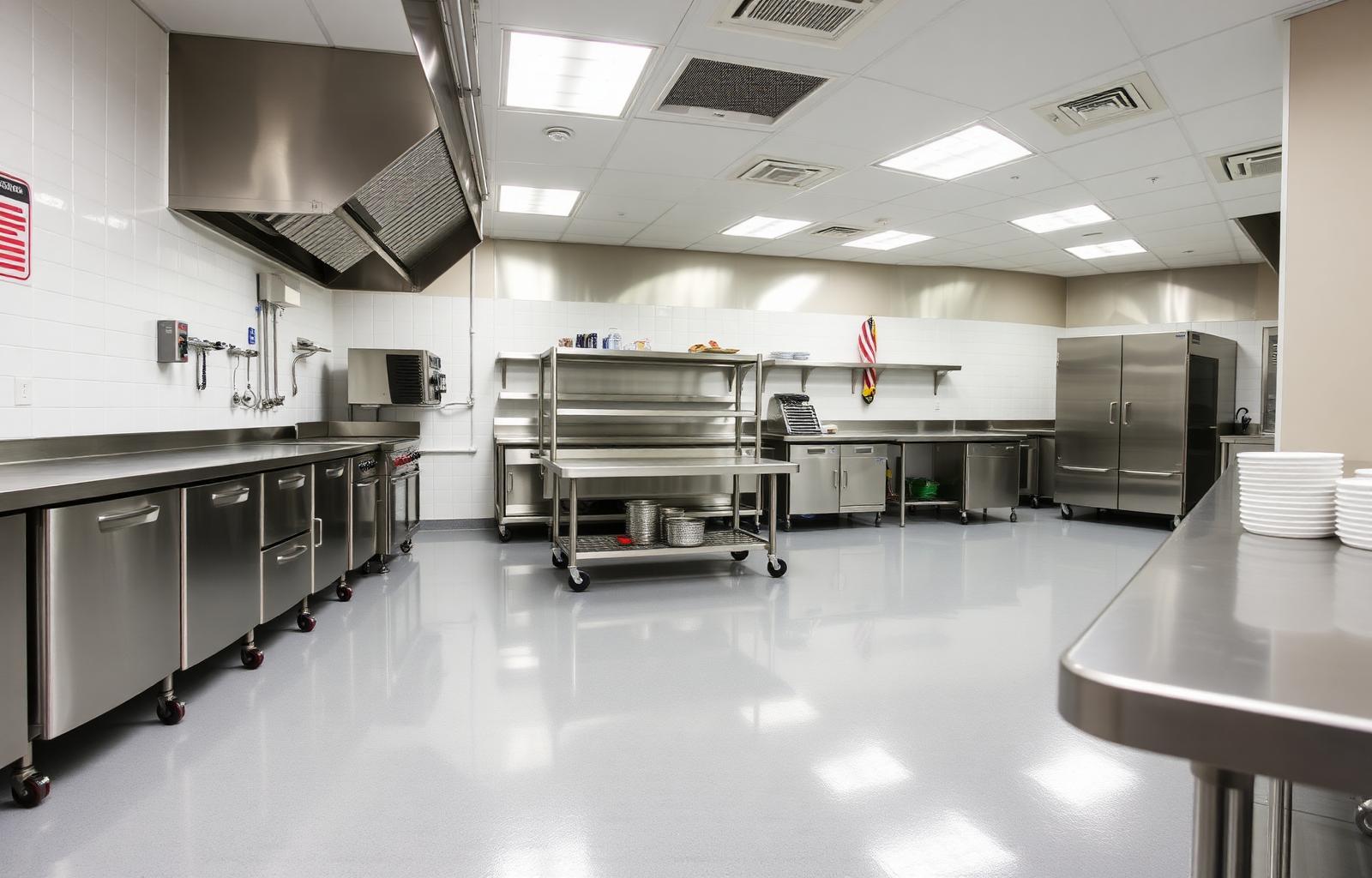
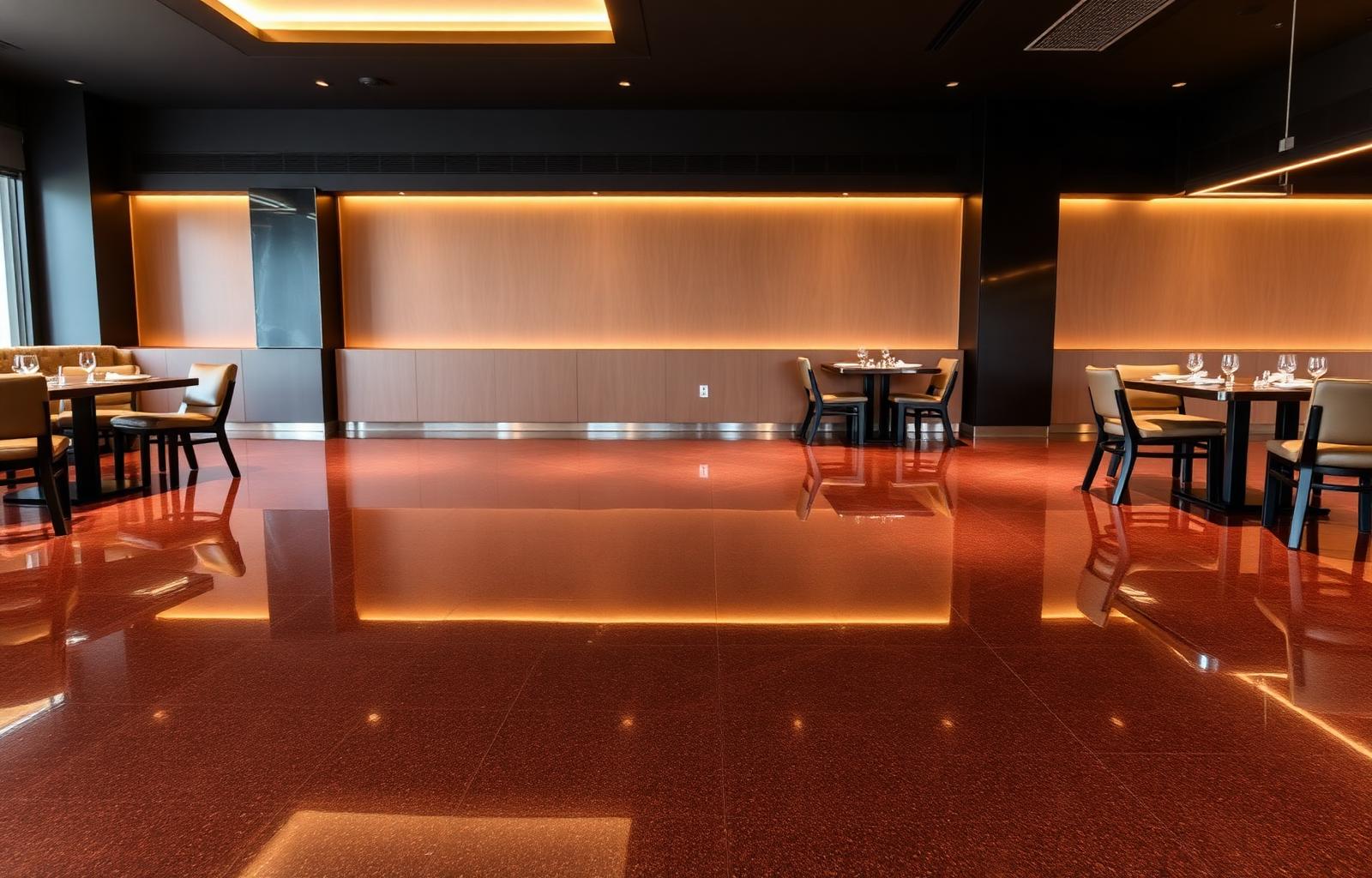
Every zone of a restaurant has different demands. We engineer the system to match — high-traction urethane mortar for the line, decorative quartz for dining rooms, metallic finishes for craft bars, and chemical-resistant builds for walk-in coolers and dishwashing areas.

  • Kitchens & cook lines — urethane mortar or quartz broadcast, slip-resistant and heat-resistant
  • Prep areas & dishrooms — chemical-resistant epoxy with integral coved bases
  • Walk-in coolers & freezers — low-temperature-cure systems engineered for cold storage
  • Dining rooms — decorative metallic, flake, or polished concrete finishes
  • Bars & lounges — high-end custom designs with logo inlays
  • Restrooms & service hallways — antimicrobial, easy-clean, seamless

Installed around your service schedule

Restaurants can't go dark for a week. Most of our restaurant installs are scheduled around closed days, late-night windows, or short remodel shutdowns. Polyaspartic and fast-cure urethane topcoats return floors to full service in 24 hours — often overnight. We coordinate with your GC, equipment vendors, and inspection schedule so you reopen on time.

Safety, sanitation, and inspection-ready

A bad floor is a liability — slip-and-fall claims, failed health inspections, and lost service days add up fast. Our restaurant systems are engineered for the demands of NJ Department of Health inspections and OSHA slip-resistance standards from day one.

  • Aluminum oxide or quartz broadcasts for OSHA-compliant slip resistance
  • Antimicrobial topcoats inhibit bacteria, mold, and yeast growth
  • Resistant to bleach, quaternary sanitizers, and acidic degreasers
  • Seamless integral cove bases eliminate wall-to-floor harborage points
  • Low-VOC formulations safe for occupied buildings and quick reopen

What it costs in New Jersey

Restaurant epoxy flooring in NJ typically runs $6–$15 per square foot installed for standard back-of-house systems, and $10–$25 per square foot for high-build urethane mortar kitchens or decorative front-of-house finishes. Cost depends on slab condition, system thickness, cove bases, moisture mitigation, and decorative complexity. Most operators recover the investment within 3–5 years from eliminated re-grouting, tile replacement, and slip-claim exposure. Every project starts with a free walk-through and a detailed line-item quote.

Our restaurant flooring process

We've coated everything from 800 sq ft kitchens to full-service multi-room restaurants. Our crews are fully insured, ServSafe-aware, and experienced working around active kitchens and tight reopen windows.

  • Free consultation and on-site assessment
  • System design tuned to each zone (kitchen, dining, bar, walk-in)
  • Diamond grinding, crack repair, and moisture testing
  • Primer, base coat, decorative or quartz broadcast, and chemical-resistant topcoat
  • Integral cove bases and equipment-pad detailing where required
  • Final walk-through and care instructions for your staff

Frequently asked questions

Can restaurant epoxy flooring be installed without closing for a week?

Yes. Most restaurant installs are scheduled around closed days or short remodel windows. Fast-cure urethane and polyaspartic topcoats return floors to full service in 24 hours — often overnight for smaller zones.

Is epoxy flooring slip-resistant enough for a commercial kitchen?

Absolutely. We broadcast aluminum oxide or quartz aggregates into the topcoat to deliver OSHA-compliant slip resistance, even on wet, greasy kitchen floors. The texture is tuned to the zone — aggressive for the line, lighter for dining areas.

Will it pass NJ Department of Health inspection?

Yes. Our restaurant systems are USDA, FDA, and HACCP compliant, seamless, non-porous, and finished with integral coved bases at walls and equipment — exactly what NJ health inspectors look for.

How does epoxy handle grease, oil, and harsh degreasers?

100% solids epoxy with a urethane or polyaspartic topcoat is chemically resistant to animal fats, cooking oils, acidic foods, bleach, and commercial kitchen degreasers. Daily cleaning won't degrade the surface.

Can you do the dining room and bar too — not just the kitchen?

Yes. We install decorative metallic, flake, polished concrete, and custom logo-inlay finishes in dining rooms, bars, and lounges. Front-of-house and back-of-house get different systems tuned to each space.

How is restaurant epoxy flooring maintained?

Daily sweeping and damp mopping with a neutral or mildly alkaline cleaner is all it takes. No stripping, no waxing, no re-grouting. A properly installed system lasts 10–15+ years in a busy commercial kitchen.

Free Estimate

Ready to start your project?

Licensed, insured, and serving all of New Jersey from South Bound Brook. Same-week consultations available.

TB
Written by

Thomas Blanco — Founder, Blanco Pro Services

Thomas founded Blanco Pro Services in South Bound Brook, NJ and is currently pursuing a degree in Business Administration. He brings hands-on experience in hardscaping and concrete plus two years of professional residential demolition — and writes from the field, not from a marketing desk.

Keep reading

Free Estimates · Licensed & Insured

Ready to transform
your space?

From mirror-glass epoxy floors to elegant paver patios — let's build something extraordinary together.