B
Blanco Pro
Services
Buyer's Comparison

Epoxy vs Polyaspartic in New Jersey: Cost, Lifespan & Which to Choose

June 2026 9 min readresidential applications
Epoxy vs Polyaspartic in New Jersey: Cost, Lifespan & Which to Choose

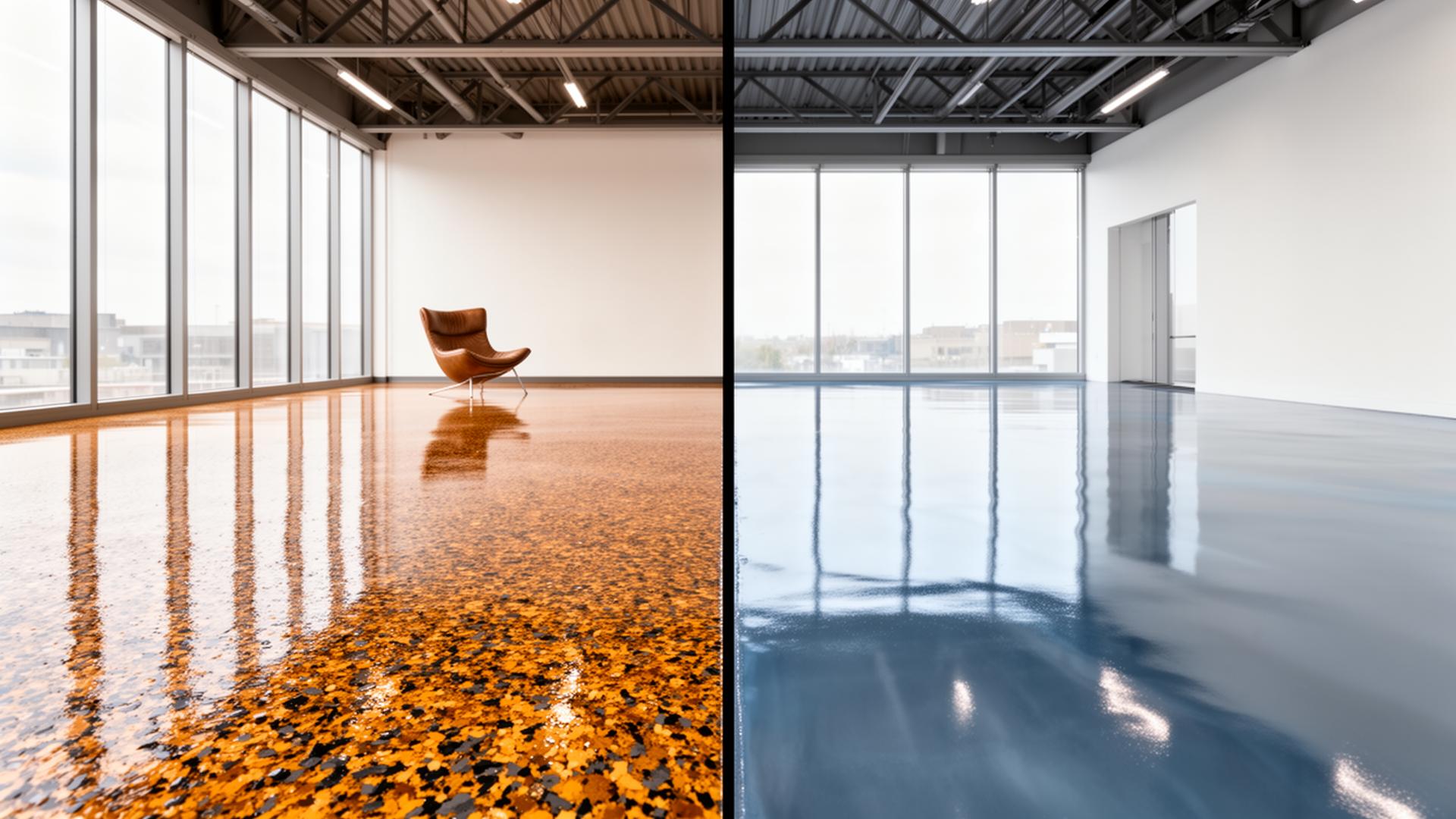
Epoxy and polyaspartic are the two systems every NJ garage and commercial floor decision comes down to. They look almost identical on day one — both glossy, both seamless, both decorated with flake or metallic if you want. The differences show up in cure time, UV stability, chemical resistance, and price. This guide gives you the honest head-to-head with real Blanco Pro pricing for South Bound Brook, NJ and the rest of the state.

TL;DR — the head-to-head

If you skip the rest of this article, here's the short version: epoxy is the proven workhorse and slightly cheaper, polyaspartic is faster-curing and UV-stable. In practice the best system is usually a hybrid — epoxy base coat for build and adhesion, polyaspartic topcoat for cure speed and UV. That's what Blanco Pro Services installs on most NJ garages.

  • Epoxy base + flake + polyaspartic topcoat — most popular hybrid in NJ
  • Pure epoxy systems: best value for indoor / shaded spaces
  • Pure polyaspartic systems: best for outdoor, time-sensitive, or UV-exposed installs
  • Single color hybrid: $2,000–$3,000 per 500 sq. ft.
  • Flake hybrid: $2,500–$3,000 per 500 sq. ft.
  • Metallic hybrid: $3,000–$6,000 per 500 sq. ft.

Cost: what each system actually runs in NJ

Pricing reflects materials, prep, and labor. Polyaspartic resin costs roughly 2x epoxy by the gallon — but the faster cure means lower labor hours and a one-day install instead of three. Net cost difference is smaller than you'd expect. Here's what Blanco Pro Services charges across South Bound Brook and the rest of New Jersey:

  • Single-color epoxy: $2,000–$3,000 per 500 sq. ft.
  • Single-color polyaspartic: $2,500–$3,500 per 500 sq. ft.
  • Flake hybrid (epoxy + polyaspartic topcoat): $2,500–$3,000 per 500 sq. ft.
  • Metallic epoxy with polyaspartic topcoat: $3,000–$6,000 per 500 sq. ft.
  • Industrial 60–80 mil epoxy: starts at $3,500 per 500 sq. ft.

Cure time and downtime

This is where polyaspartic earns its premium. Epoxy is walk-on in 24 hours and full-traffic in 72. Polyaspartic is walk-on in 4 hours and drivable in 24. For a working garage, restaurant kitchen, or salon, the extra cost of polyaspartic pays for itself in avoided downtime.

UV stability — the polyaspartic advantage

Pure epoxy yellows under UV exposure. Not catastrophically, but a white or light gray epoxy floor in a garage with a south-facing window will visibly amber within 2–3 years. Polyaspartic is aliphatic chemistry — it's UV-stable and stays color-true for decades. If your floor sees any direct sunlight, your topcoat needs to be polyaspartic. Full stop.

Chemical and impact resistance

Standard epoxy resists most household and automotive chemicals — oil, antifreeze, brake fluid, gasoline (with quick cleanup). Polyaspartic is more impact-resistant and slightly more chemical-resistant. For garages with hobby use (mechanical work, woodshop, etc.) the hybrid system is the right call. For aggressive industrial chemistry, we step up to novolac epoxy or vinyl ester — different conversation entirely.

Which should you choose? The Blanco Pro rule of thumb

After hundreds of NJ installs, here's our actual recommendation by use case:

  • Residential garage — hybrid (epoxy base + flake + polyaspartic topcoat)
  • Basement / indoor interior — pure epoxy is fine, lower cost
  • Commercial retail / salon — hybrid with chemical-resistant urethane topcoat
  • Outdoor patio or pool deck — full polyaspartic system, no exception
  • Warehouse / forklift — high-build epoxy with polyaspartic safety stripes
  • Restaurant kitchen — urethane cement (different family, different conversation)

Frequently asked questions

Is polyaspartic actually worth the extra cost?

For garages, outdoor surfaces, and any space that can't afford 3 days of downtime — yes. For shaded indoor spaces with no time pressure, pure epoxy is the better value. The hybrid system gets you 80% of the polyaspartic benefit at a price closer to epoxy.

Can I install polyaspartic over my old epoxy floor?

Sometimes — if the existing epoxy is structurally sound, tightly bonded, and properly screen-sanded. We assess each existing floor and give an honest yes/no during the free estimate. About 60% of older floors can be recoated; the rest need full re-prep.

Which lasts longer, epoxy or polyaspartic?

In direct comparison: polyaspartic topcoats outlast epoxy topcoats by roughly 30%. But the base coat does the heavy structural work, and epoxy is the better base. That's why hybrid systems hit the longest real-world lifespan — typically 20–25 years in residential garages.

Do you offer free quotes for NJ projects?

Yes — Blanco Pro Services provides free on-site estimates across all of New Jersey from our South Bound Brook base. Call 732-357-7355 or use our contact form. Typical turnaround on the written quote is 1–2 business days.

Free Estimate

Ready to start your project?

Licensed, insured, and serving all of New Jersey from South Bound Brook. Same-week consultations available.

TB
Written by

Thomas Blanco — Founder, Blanco Pro Services

Thomas founded Blanco Pro Services in South Bound Brook, NJ and is currently pursuing a degree in Business Administration. He brings hands-on experience in hardscaping and concrete plus two years of professional residential demolition — and writes from the field, not from a marketing desk.

Keep reading

Free Estimates · Licensed & Insured

Ready to transform
your space?

From mirror-glass epoxy floors to elegant paver patios — let's build something extraordinary together.